Technical Standards and Safety Authority
From wish list to working portal
How do you turn a long internal wish list into a portal that works for inspectors, contractors, compliance managers and TSSA staff alike?

TSSA enforces technical safety regulations in Ontario, from boilers and elevators to fuels.
Thousands of businesses and individuals depend on TSSA to license equipment, book inspections and stay compliant.
Challenge
TSSA’s old portal handled a few basic tasks for one user group. As it rebuilt the portal, TSSA had 40+ feature requests, but no clear view of which mattered most, to whom, or how they fit together. The portal also touched almost every part of TSSA’s operations.
Building every request risked a portal that was expensive, complicated and still missed what users needed.
Our Response
We didn’t start with screens. We started with how regulated equipment moves through its life, and where people’s work touches TSSA along the way. Over about a year, we brought staff and customers in early and often, and turned 40+ requests into 15 core features that research had validated . We stayed involved through design, testing and launch planning.
We tested every assumption before it became a requirement.
Each method answered a question the one before it raised. Purple marks where validation happened with real users before launch.
From a wish list to an evidence base
Start inside the organization
A portal is only as good as the processes behind it. We surveyed all portal-connected TSSA staff, more than 30 people . Then we ran a workshop with the project, licensing and IT teams to rank pain points and features by impact and feasibility. That built early agreement across departments, and gave us themes to test with customers.
The research also showed what had to happen inside TSSA. Many of the most-wanted features depended on accurate customer data. Finding this early meant TSSA could plan focused data cleansing alongside the build, instead of discovering the gap at launch.
ODA often only saw a renegotiation when something went wrong.
We ranked proposed features by impact and feasibility with TSSA’s project, licensing and IT teams. This is a simplified redraw; feature names are withheld.
Map the life of a piece of equipment
TSSA’s customers range from individual contractors to large organizations. In three co-design workshops with more than 40 staff and customers, each group mapped a piece of regulated equipment from purchase to decommissioning, marking every point where they deal with TSSA.
The lifecycle view showed what no single team could see: who’s involved at each stage, where hand-offs break down, and where licensing gets confusing. The resulting journey map showed where the portal could remove friction.
We mapped the life of the equipment, not just the tasks in the portal.
A simplified version of the lifecycle journey map.
Prototype with the people who will use it
We took prototypes back to each TSSA team to annotate, question and flag concerns, so the design matched how TSSA actually works. In 14 one-on-one interviews with portal users, we validated, reworked or cut the requirements from the internal workshops.
Decisions were based on evidence, not on which department spoke loudest.
Research turned a long wish list into a smaller set of features that had been tested and could be defended.
One-on-one user tests with an interactive prototype helped narrow scope to core features.
Moderated usability testing with a working version of the portal prioritized must-fixes versus future nice-to-haves.
Test early, then test again with real data
We designed the first key screens to set the visual direction, then tested an interactive Figma prototype one-on-one. Even a limited prototype showed major differences between audience types, and led us to narrow the first release to a few core features.
Once a working beta ran in staging with real data, we ran moderated usability testing. Our final report set out what to fix before launch and a roadmap for after.
A simple prototype changed the scope of the first release.
Working alongside the new website
The portal had to work as one service with TSSA’s new public website, so customers could move from finding information to completing a task without feeling the switch. Researching both meant each shaped the other: which tasks belonged where, and how better self-service could take pressure off the call centre.
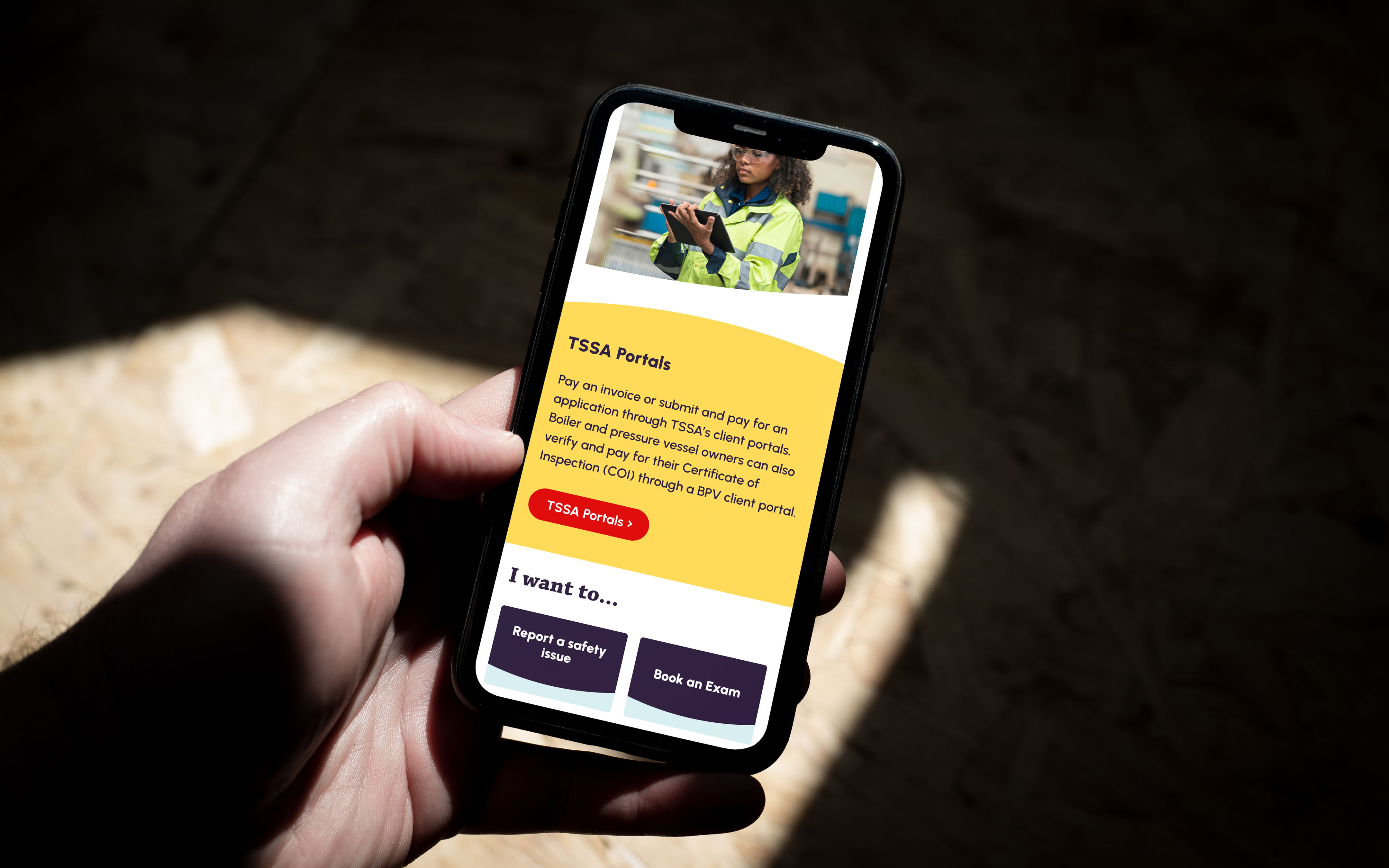
Research turned a long wish list into a smaller set of features that had been tested and could be defended.
Results
Owners, contractors, inspectors and compliance managers now have one place to handle the licensing and inspection tasks that matter most to them.
TSSA staff have a portal built around how their teams actually work. Because the customer data cleansing was planned alongside the build, the features customers asked for most were ready to work at launch. TSSA also has a prioritized roadmap, grounded in user evidence, to guide what comes next.
Highlights
- 500+ testing and feedback responses from 200+ participants
- 3 co-design workshops with 40+ staff and customers
- 14 one-on-one user interviews
- 6 validation engagements: card sorts, tree tests and first-click tests
Let’s make something better together.